Sound urban development: lessons from Phú Mỹ Hưng
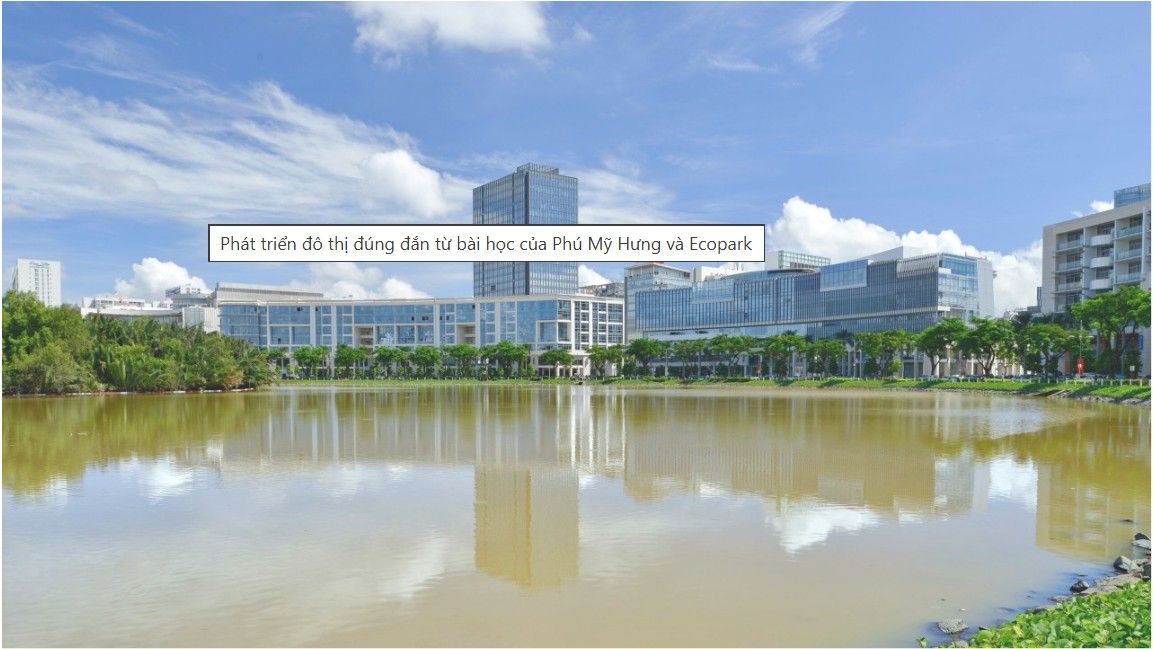
Over three decades since the 1993 Land Law, Vietnam’s real estate market has evolved from a foundational phase to a cycle of re-establishment, in which infrastructure and planning play a decisive role in long-term value. Against that backdrop, the Phú Mỹ Hưng urban area (Ho Chi Minh City) stands out as a model of best practice, offering valuable lessons in sustainable urban development thinking for major economic centres.
The power of disciplined planning and market trust
Phú Mỹ Hưng’s success is not down to chance. According to a senior expert at Cushman & Wakefield Vietnam, this urban area is clear evidence of the power of disciplined planning. Rather than chasing mass launches, Phú Mỹ Hưng strictly follows a clear development sequence and subdivision.
It is this consistency that has built solid trust in the market. When customers see the commitment to implementing the plan as set out, the value of real estate is not only maintained but also grows sustainably over time. This is the foundation for turning a new area into a centre in the true sense, rather than merely an extension of the existing core.
Urban logic: when housing is not the only factor
One of the biggest lessons from Phú Mỹ Hưng is the thinking that an urban area is not the sum of individual projects, but a complete living structure. Here, value growth is the result of sound “urban logic”, in which housing, infrastructure, jobs and amenities are designed together.
The five golden principles distilled from development practice are:
- Strategic vision: Clearly defining the area’s role within the city’s overall structure.
- Infrastructure connectivity: Transport must be a prerequisite for driving population movement and capital flows.
- Balanced community structure: Ensuring diversity in resident groups and property types for sustainable development.
- Lifestyle ecosystem: Schools, hospitals, parks and public spaces must form an essential “framework”.
- Disciplined development phasing: Development follows a roadmap, avoiding excessive focus on commercial space at the expense of living amenities.
Solving the problem for the future of Vietnam’s urban areas
Currently, both Hanoi and Ho Chi Minh City face major pressure in their core areas. However, urban expansion does not mean simply increasing housing supply. The lesson from Phú Mỹ Hưng shows that without a strategy for creating jobs and a public-service ecosystem, satellite urban areas will struggle to attract genuine residents.
Factors once regarded as “soft” — landscape, greenery and open space — are in fact the “hard” drivers determining market demand. People today do not move simply because housing is cheaper; they seek a better living experience, a greener environment and more convenient services.
In conclusion, the future of Vietnam’s urban areas will no longer be determined by the number of projects, but by the quality of new urban structures. The values that Phú Mỹ Hưng has established are a guiding principle for developers and urban managers to create places where people truly want to live, work and remain long term.

You are invited to explore Hồng Hạc City, a project developed by Phú Mỹ Hưng in the north.
——————————————————————————–
PHÚ MỸ HƯNG REAL ESTATE SALES CENTRE
Hotline: 0938 448 427
Website: phumyhungcenter.com
Address: 801 Nguyễn Văn Linh, Tân Mỹ Ward, Ho Chi Minh City