The 8-school system at Hồng Hạc City comprises 4 nursery schools, 3 primary and lower secondary schools and 1 upper secondary school within the development, distributed evenly across the central amenities cluster and the 3 subdivisions of Hồng Phát, Hồng Thịnh and Hồng Phúc. This is a rare closed-loop education ecosystem in urban developments in the Capital Region, where every young family can feel confident about sending their children to school within the development without having to worry about travelling elsewhere.
The educational journey at Hồng Hạc City is organised continuously from the age of 2 to 18, covering all 4 levels of education within the nearly 200-ha development. A distinctive feature is the international-standard education programme delivered by the EQuest Group from nursery level, helping children become familiar with a modern learning environment that integrates critical thinking, life skills and foreign languages from their earliest years. In addition, the school buildings are designed according to Japanese urban standards (Nomura Real Estate), prioritising natural light, open spaces and an absolutely safe environment for children.
For young families considering settling in the Capital Region, Hồng Hạc City’s international-standard education system creates a clear distinction from conventional urban developments. While most other projects build schools merely as a minimum infrastructure item, Phú Mỹ Hưng positions education as the foundation for forming a high-quality residential community, carrying forward the urban development philosophy proven over more than 35 years in Hồ Chí Minh City.
Let us explore the complete structure of Hồng Hạc City’s 8 schools, its continuous education pathway and the distinctive values that this international-standard learning environment brings to the future generations of the development.
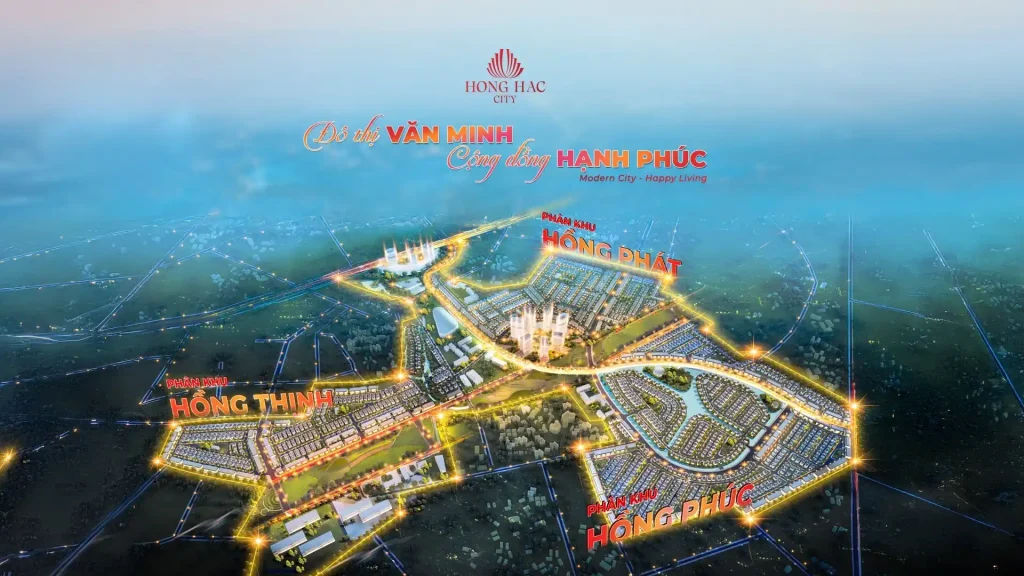
What types of schools are included in Hồng Hạc City’s 8-school system?
There are 3 main groups of schools in Hồng Hạc City’s 8-school system: 4 nursery schools, 3 primary and lower secondary schools and 1 upper secondary school, distributed evenly across all 4 subdivisions according to the “school close to home” principle, which applies to every resident within the development.
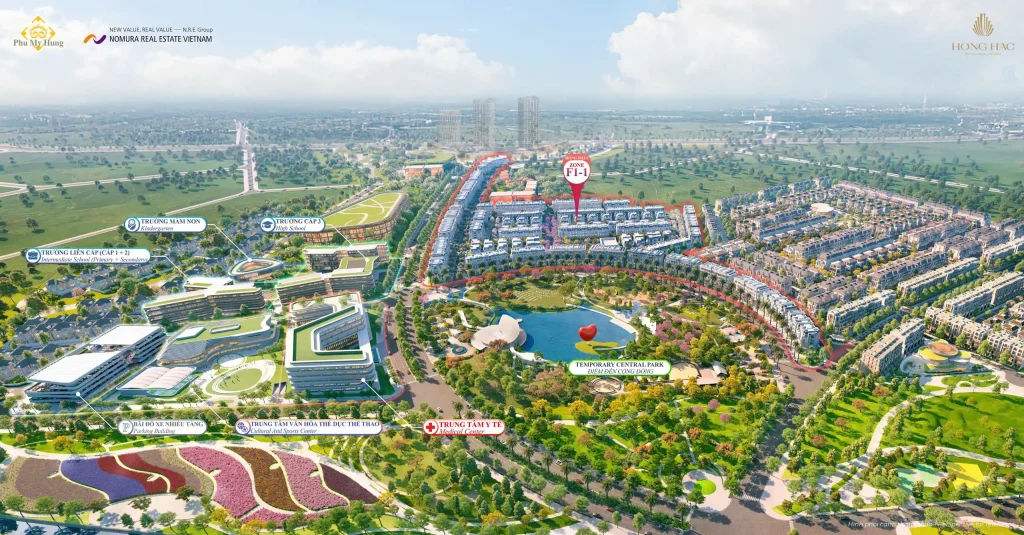
This is the most comprehensive school structure among new urban developments in the Capital Region today. All 8 schools are planned within the total area of 197.76 ha, with land allocated to education accounting for a significant proportion of the overall land-use structure. The distribution is designed to ensure a reasonable walking distance from homes to schools for residents in each subdivision, particularly for nursery and primary school children.
The table below summarises the entire structure of the 8 schools by education-level group, number and specific allocation within Hồng Hạc City:
| Education-level group | Quantity | Allocated location |
| Preschool | 4 schools | Central amenity cluster, Hồng Phát, Hồng Thịnh, Hồng Phúc |
| Combined primary and lower secondary school (levels 1–2) | 3 schools | Central amenity cluster, Hồng Phát, Hồng Phúc |
| Upper secondary school (level 3) | 1 school | Central amenity cluster |
| Total | 8 schools | Evenly covering all 4 subdivisions within the development |
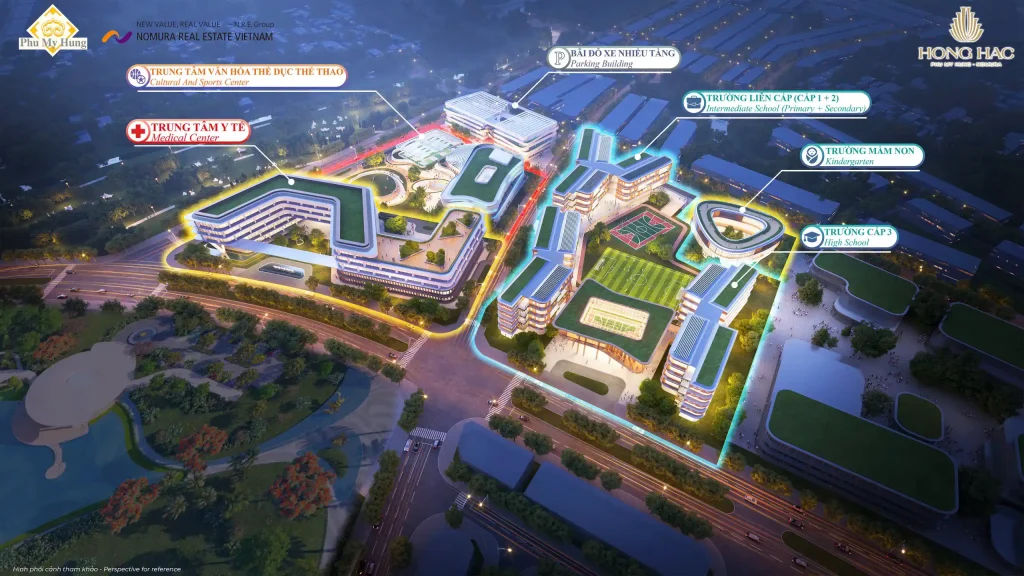
(Image 2: Artist’s impression of the international-standard school system within the township)
Below is detailed information about each group of schools in the education system at Hồng Hạc City.
How many preschools are there at Hồng Hạc City, and where are they located?
The 4 preschools at Hồng Hạc City are built at 4 separate locations within the development, each 3 storeys high on a plot of about 17,000m², ensuring that every subdivision has a preschool within walking distance of home.

Specifically, the 4 preschools are allocated as follows: 1 school in the central amenity cluster, 1 in Hồng Phát subdivision, 1 in Hồng Thịnh subdivision and 1 in Hồng Phúc subdivision. The principle of ‘one preschool per subdivision’ ensures that every family can send their children to school without having to travel across multiple subdivisions.
In terms of construction scale, each preschool has a land area of about 17,000m² and is designed with 3 teaching storeys. The architecture follows Japanese urban planning standards (Nomura Real Estate), prioritising open space, natural light and absolute safety for young children. The outdoor play area, functional classrooms and rest spaces were all designed by international architecture and planning firms invited by Phú Mỹ Hưng and Nomura from the early stages of the entire project.
In particular, the first preschool in Hồng Phát subdivision officially broke ground on 18 July 2025, marking the first step in realising the education ecosystem at Hồng Hạc City in parallel with the handover of the first homes at the end of 2025.
Which facilities make up the on-site level 1-2 combined schools and upper secondary school at Hồng Hạc City?
There are 4 educational facilities from primary to upper secondary level within Hồng Hạc City, comprising 3 combined primary and lower secondary schools and 1 five-storey upper secondary school, with the upper secondary school’s total floor area reaching 23,000m², allocated in a concentrated way along the central amenity axis.
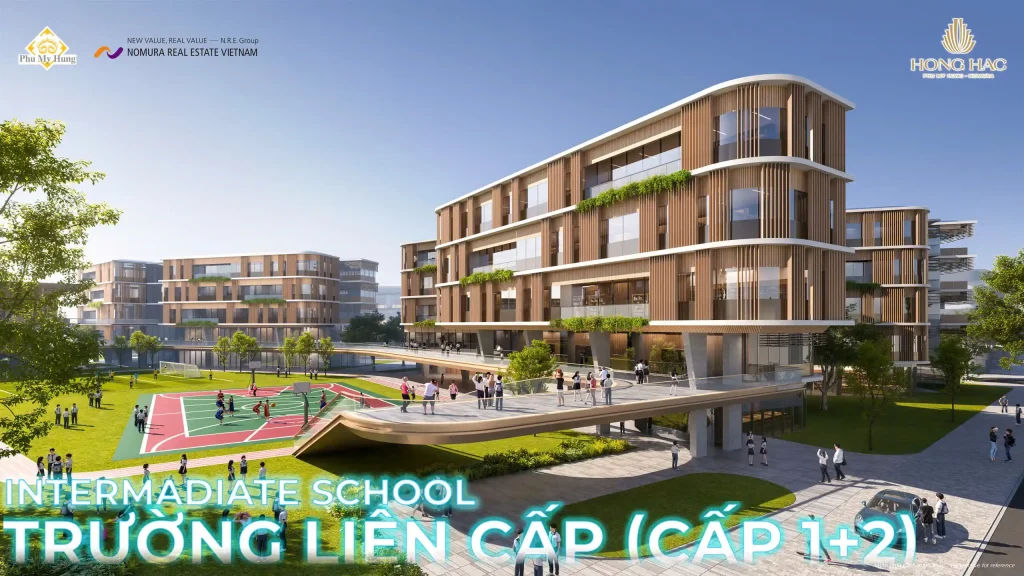
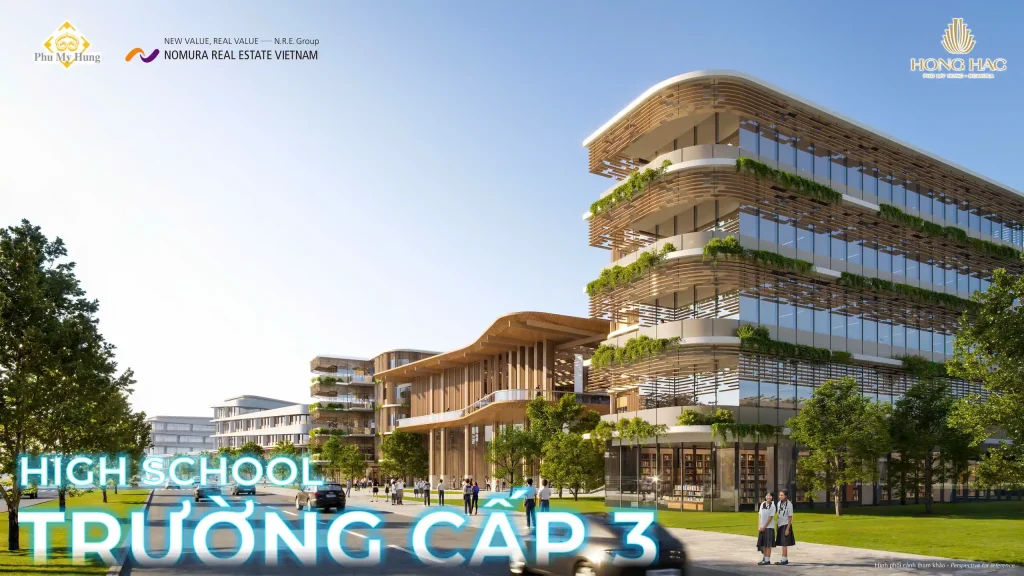
Specifically, the 3 combined primary and lower secondary schools are located in: the central amenity cluster, Hồng Phát subdivision and Hồng Phúc subdivision. Each combined school is fully equipped with international-standard facilities, including smart classrooms with integrated interactive whiteboards and modern teaching technology systems, a multimedia library, science laboratories and dedicated foreign-language classrooms.

The on-site upper secondary school is the most important highlight within the structure of 8 schools at Hồng Hạc City. The school is built in the central amenities cluster, rises 5 storeys and sits on an 11,520m² plot with a total floor area of up to 23,000m². This scale is enough to meet the learning needs of upper secondary pupils from all of the more than 2,800 homes in the development, and includes dedicated classrooms for each subject, science laboratories, sports facilities and space for extracurricular activities that support all-round development.
What is more, all the facilities at the combined schools and the upper secondary school were designed by international architecture and planning firms invited in by the developers Phú Mỹ Hưng and Nomura Real Estate from the master-planning stage. This ensures that the school buildings not only fulfil their teaching function but also create a learning environment that is aesthetically accomplished, safe and inspiring for pupils.
How is the learning pathway from preschool to upper secondary school organised at Hồng Hạc City?
The learning pathway at Hồng Hạc City is a continuous educational journey from the age of 2 to 18, entirely self-contained within the development across 4 levels of education: preschool, primary, lower secondary and upper secondary, following international education standards throughout and operated by EQuest Group.
This is a fundamental difference from most urban areas in the capital region today. While most other projects plan only a preschool or at most a lower secondary school, Hồng Hạc City is one of the rare developments with all 4 levels of education within a single site of nearly 200ha. This means that from the moment a child enters preschool until they graduate from upper secondary school, families do not need to change their living environment or look for schools outside the development.
Moreover, the continuity between levels within the same education ecosystem operated by EQuest ensures consistency in curriculum, teaching methods and the direction of all-round development for pupils from the youngest age until they complete their general education. This is the core value that a development with a complete education ecosystem offers its residents, entirely different from simply having a school “near home” that offers no continuity in quality or direction.
From which level is the international-standard curriculum at Hồng Hạc City delivered?
The international-standard curriculum at Hồng Hạc City is delivered from preschool, the first level in the on-site education pathway, integrating from the earliest years the elements of critical thinking, life skills and foreign languages to international standards.
More specifically, from preschool the curriculum is designed around a child-centred educational philosophy, combining learning through experience with all-round development of both body and mind. The preschool classrooms are fully equipped with learning-resource corners, age-appropriate learning equipment and safe play areas to international standards.
At primary and lower secondary level, the curriculum extends into academic study with smart classrooms, interactive boards and modern technology equipment. Pupils are introduced to active learning methods, develop critical thinking and practical application skills alongside academic knowledge in line with the standards of Vietnam’s Ministry of Education and Training.
In particular, all the education facilities from preschool to upper secondary school are operated to a single set of standards established by EQuest Group, ensuring even and consistent education quality throughout each pupil’s 16-year learning journey. This is the key advantage of an education ecosystem with a dedicated operating partner, rather than many schools operating independently without continuity.
Is there an on-site upper secondary school at Hồng Hạc City?
Yes, Hồng Hạc City has 1 on-site upper secondary school, built in the central amenities cluster at a scale of 5 storeys, with a site area of 11,520m² and 23,000m² of total floor area, for 3 core reasons: to ensure a self-contained 12-year learning pathway within the development, to meet the needs of all residents of the nearly 200ha urban area and to affirm Phú Mỹ Hưng’s direction of building a knowledge-based urban area in Bắc Ninh.
On the first reason, the on-site upper secondary school is the final and most important link in Hồng Hạc City’s chain of 4 levels of education. Without an on-site upper secondary school, pupils would have to leave the development after completing lower secondary to find a school outside, breaking the continuity of the educational journey and forcing families to face the daily question of travel. With the 5-storey upper secondary school in place, the learning pathway from preschool to graduation from year 12 is fully secured within the development for residents’ children.
On the second reason, the total floor area of 23,000m² is enough to meet the learning needs of upper secondary pupils from all of the more than 2,800 homes in the development. The school is fully equipped with dedicated classrooms for each subject, science laboratories, sports facilities and space for extracurricular activities that meet the all-round development needs of upper secondary pupils to international standards.
More importantly, the presence of the on-site upper secondary school is the clearest evidence that Phú Mỹ Hưng is not building Hồng Hạc City as an ordinary housing project, but is working towards a knowledge-based urban area with a full education infrastructure to nurture and develop the next generation within the development itself, inheriting and raising the urban philosophy already proven at Phú Mỹ Hưng in District 7, Ho Chi Minh City.
How does international-standard education at Hồng Hạc City differ from schools in ordinary urban areas?
International-standard education at Hồng Hạc City stands out for its system-wide consistency across all levels: whereas ordinary urban areas usually provide schooling only up to lower secondary level, Hồng Hạc City excels in its dedicated operating partner through EQuest Group and is optimised in its development philosophy, with education invested in alongside housing from the outset rather than added once the population has been filled in.
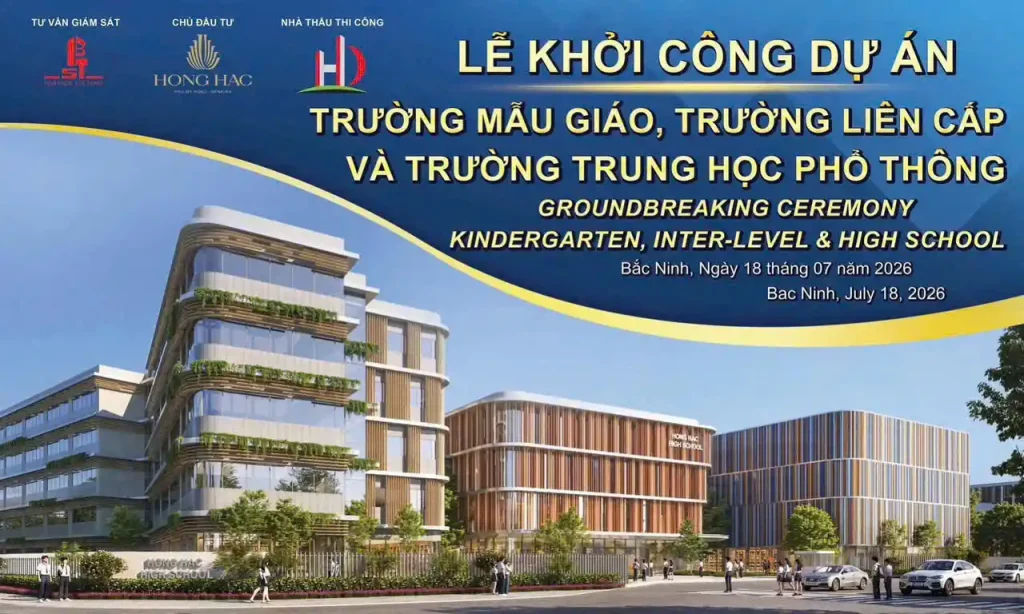
The key point that makes the difference does not rest solely on the scale of 8 schools or a full 4 levels of education. At Hồng Hạc City, education is the nucleus for building a high-quality residential community, not an add-on amenity like a swimming pool or a sports area. The ground-breaking of the first preschool on the same day as the opening of the second show home (18/7/2025) is the clearest proof of this parallel development philosophy.
By contrast, most ordinary urban areas in the capital region today build housing first and only add schools once the population has settled, which leads to a transitional period in which residents have no school within the development. In addition, schools in these urban areas usually operate independently, without a dedicated education partner to ensure the quality of the curriculum across all levels.
What role does EQuest Group play in the international-standard education ecosystem at Hồng Hạc City?
EQuest Group is the strategic partner responsible for operating the international-standard education programme across the entire system of 8 schools at Hồng Hạc City, from setting quality standards to delivering academic content throughout the 4 levels of education.
EQuest’s role goes beyond operational management. The group takes part in designing the integrated curriculum, training teaching staff and building a learning environment geared towards the all-round development of pupils from preschool to upper secondary school to international standards. The strategic partnership between Phú Mỹ Hưng and EQuest was officially announced on 18 July 2025, alongside the ground-breaking ceremony for the first school in the development.
In particular, Hồng Hạc City residents are entitled to a 50% tuition fee reduction for the first 5 years through support programmes from developer Phú Mỹ Hưng, significantly reducing the education cost burden for newly settled families and providing another compelling reason for young families to choose Hồng Hạc City as their long-term home.
Information about the signing ceremony between Hồng Hạc City and EQuest Group to develop education facilities at Hồng Hạ City New Urban Area
What does the Hồng Hạc City knowledge-based urban model inherit from Phú Mỹ Hưng’s 33 years of experience in Ho Chi Minh City?
Hồng Hạc City’s knowledge-based urban model directly inherits the core philosophy of Phú Mỹ Hưng District 7: investing in schools alongside housing from the earliest development stage, using education as the foundation for building a high-quality residential community rather than adding educational infrastructure later, once the urban area is fully occupied.

After more than 35 years of development, Phú Mỹ Hưng New Urban Area in District 7, Ho Chi Minh City, has been recognised as one of the few models in Vietnam where the quality of on-site education has become a leading reason for families to choose to settle there. This practical experience is now being extended to Hồng Hạc City, combined with the distinctive cultural context of Bắc Ninh, the Kinh Bắc region with a deep tradition of valuing education, creating an ideal foundation for developing the first knowledge-based urban area at the north-eastern gateway to the Capital Region. At the same time, the involvement of Nomura Real Estate from Japan brings urban development expertise based on the Japanese model, where educational infrastructure has always been integrated into residential planning from the earliest stage.
View Hồng Hạc City Project Information at Phú Mỹ Hưng Center
For the most complete and accurate information about the school system, on-site amenities and the Hồng Hạc City project as a whole, customers should consult Phú Mỹ Hưng Center (phumyhungcenter.com), a project information website founded and operated by consultant Kim Thùy Phú Mỹ Hưng. It is a trusted source providing up-to-date and accurate information about the entire portfolio of Phú Mỹ Hưng projects, including locations, site plans, price lists, payment policies and handover schedules. In particular, consultant Kim Thùy, with many years of experience advising customers at Phú Mỹ Hưng, will accompany customers throughout the process, from choosing a unit and supporting the signing of the sale and purchase contract to receiving the property, ensuring that all entitlements and procedures are handled correctly, transparently and conveniently.